
Mossman Central Mill
| Mossman Central Mill | |
|---|---|
|
| |
| Location | |
| Coordinates | 16.45786° S, 145.37836° E |
| State | Queensland |
| Region | Northern Region |
| LGA | Douglas Shire Council |
| Details | |
| Established | 1894 (132 years ago) |
| Closed | 2023 (3 years ago) |
| Owner | Far Northern Milling (at closure) |
| Gauge | 610 mm (2 ft) |
| Annual Crush | 754,403 tonnes (2022)[1] |

Mossman Central Mill was a sugar mill located in the Douglas Shire of Far North Queensland. Until its final crushing season in 2023, it was Australia's most northerly operating sugar mill. The mill operated for more than 125 years and was notable for its extensive 610 mm (2 ft) cane railway network and its early adoption of computerised process control.
History
Establishment
The Mossman River Central Mill League was formed in 1893 following the passage of the Sugar Works Guarantee Act. The Mossman Central Mill Company Ltd was registered in Brisbane on 4 December 1894.[2] Construction of the mill began on 27 April 1896 and the first cane was crushed on 23 August 1897, supplied from Annie Rose's Bonnie Doon property.[3]
A 610 mm (2 ft) gauge tramway network was constructed to convey cane to the mill and also carried passengers and general freight. When the mill opened in 1897, raw sugar was transported by rail from the mill to Thooleer wharf on the Mossman River and transferred by lighter to Port Douglas for shipment.[2]
In 1900, following a government grant to the Douglas Divisional Board, a tramway extension was completed between Mossman and the Board's wharf at Port Douglas. The line officially opened on 1 August 1900 and was used for sugar, freight and passenger traffic.[4]
Operational history
Steam locomotives initially provided motive power on the cane and passenger tramways. Diesel locomotives progressively replaced steam traction during the mid-20th century, with Mossman's diesel fleet eventually including locomotives built by Commonwealth Engineering and E.M. Baldwin.[5]
Mossman Mill was also an early adopter of computer technology. In 1967, mill data was processed through IBM's Brisbane data centre, with punched tape flown from Mossman to Brisbane and the resulting printouts returned by air. In 1971 an IBM 1800 process-control computer was installed at the mill. The Douglas Shire Historical Society records Mossman as the first sugar mill in the world to use computer-managed process control.[3]
Ownership
The mill's ownership changed several times during its operating life:
- 1894 to 2012: Operated by the grower-owned Mossman Central Mill Company Ltd. Although commonly described as a cooperative, contemporary archival descriptions note that the company operated on cooperative principles without technically being structured as a cooperative.[6]
- 2012 to 2019: Mackay Sugar Limited acquired the milling and related assets of Mossman Central Mill for $25.3 million. The transaction was completed on 4 June 2012.[7]
- 2019 to 2024: Far Northern Milling Pty Ltd, formed by Mossman and Tableland growers, completed its acquisition of the mill from Mackay Sugar on 5 July 2019. The acquisition formed part of plans to develop the wider Daintree Bio Precinct, including renewable energy and higher-value products derived from sugar cane and mill infrastructure.[8]
Closure and liquidation
During its final years the mill experienced continuing financial and operational pressure. CANEGROWERS identified reduced throughput, flooding, workforce shortages and the effects of the COVID-19 period among the challenges facing Far Northern Milling.[9]
- 20 November 2023: Far Northern Milling and the other Daintree Bio Precinct companies entered voluntary administration.[10]
- 26 November 2023: Mossman Mill completed its final crushing season, six days after the appointment of the administrator.[11]
- December 2023: Tropical Cyclone Jasper and subsequent flooding affected the Mossman district while the companies were already under administration. The administrator subsequently dealt with the effects of the cyclone and flooding while continuing attempts to restructure the group.[10]
- 29 February 2024: Creditors agreed to a proposed Deed of Company Arrangement intended to restructure and recapitalise the group.[10]
- 22 March 2024: The companies entered liquidation after the proponents of the proposed restructuring advised that they had been unable to secure the investment required to proceed.[10]
For the first time since 1897, the 2024 crop was not crushed at Mossman. Julatten growers entered a supply agreement with MSF Sugar's Tableland Mill, while coastal Mossman growers supplied Mulgrave Mill at Gordonvale. When Mulgrave completed its season in November, remaining Mossman coastal cane continued by rail to South Johnstone Mill until 23 November 2024. In total, 206,920 tonnes of coastal cane was supplied to Mulgrave and South Johnstone, while 18,632 tonnes of Julatten cane went to Tableland Mill.[12]
For the 2025 season, Queensland Government funding supported the transport of the Mossman crop to Mulgrave Mill at Gordonvale. In October 2025 the government confirmed that growers and processors had been unable to reach a commercial agreement extending the arrangement beyond the 2025 season.[13]
Asset disposition
Following liquidation, mill equipment and railway assets were progressively offered for sale. Expressions of interest for the Mossman locomotive fleet and associated spares were conducted through Grays in October 2024, with offers closing on 25 October.[14]
The former Mossman locomotive fleet was purchased by MSF Sugar. Removal of the locomotives commenced on 10 December 2024, with Daintree, the largest locomotive in the fleet, transported inland via Mareeba to South Johnstone. The smaller locomotives were transported south by the coastal route.[15]
Subsequent locomotive movements included:
- Daintree and Habana: Reported in service at South Johnstone.
- Cook and Ivy: Acquired by South Johnstone and subsequently reported stored at the Mourilyan locomotive depot.
- Douglas and Faugh-a-Ballagh: Subsequently sold to a private owner in Victoria.
- Mossman: Acquired by the Australian Narrow Gauge Railway Museum Society at Woodford after initially being transferred to MSF Sugar. The locomotive was overhauled and returned to operational condition.[16]
- Mowbray: Subsequently transferred to the Kerosene Creek Tramway in New South Wales.
The post-Mossman dispositions of Douglas, Faugh-a-Ballagh, Cook, Ivy, Daintree, Habana and Mowbray have been recorded by Australian locomotive enthusiast sources.[17]
Dismantling of railway assets continued into 2025, with dozens of cane bins and other rail stock scrapped on site.[18]
The 42-hectare mill site at 34 Mill Street was placed on the market in February 2025, with the factory, installed plant, industrial buildings, residential properties and associated land and infrastructure initially offered for sale as a whole or in sections.[19]
Location
Rollingstock
| Name | Builder | Model | Serial | Year | Current Mill | Notes |
|---|---|---|---|---|---|---|
| 28 / Daintree | E.M. Baldwin | DH28B | 7303-1-7-77 | 1977 | South Johnstone Mill | Ex Mossman. Sold to South Johnstone after Mossman closure; operational as South Johnstone #28 (Jan 2026). |
| Pioneer | Fowler | 0-6-0T | 8047 | 1899 | Out of service | Retired from Mossman in 1965; acquired by ANGRMS in 1973 and transferred to Woodford in 1983, where it remains preserved. |
| Faugh-a-Balugh | Fowler | 0-6-0T | 8733 | 1900 | Out of service | Returned by Mossman Mill to Port Douglas in 1997 for static display near the marina; preserved by the Douglas Shire Historical Society. |
| Miallo | Fowler | 0-4-2T | 20276 | 1934 | Out of service | Purchased by ANGRMS in 1973; transferred to Woodford in 1983 and remains stored awaiting restoration. |
| Bundy | Bundaberg Fowler | 0-6-2T | 2 | 1952 | Out of service | Preserved at Crystalbrook Superyacht Marina, Port Douglas. Previously operated on the Bally Hooley Steam Railway, which ceased operation in September 2021. |
| R.D. Rex | Perry | 0-4-2T | 7650.49.1 | 1949 | Out of service | Preserved at ANGRMS, Woodford. |
| Mossman | Commonwealth Engineering | AA | B1719 | 1957 | Out of service | Preserved at Australian Narrow Gauge Railway Museum Society, Woodford (Jan 2026). |
| Cook | Commonwealth Engineering | AL | AL3372 | 1964 | Out of service | Sold to South Johnstone after Mossman closure; stored at Mourilyan (Jan 2026). |
| Ivy | Commonwealth Engineering | AL | AL4181 | 1965 | Out of service | Sold to South Johnstone after Mossman closure; stored at Mourilyan (Jan 2026). |
| Douglas | Commonwealth Engineering | AL | AL2562 | 1963 | Out of service | Sold to an unidentified private owner in Victoria after Mossman closure (Jan 2026). |
| Faugh-a-Balugh | Commonwealth Engineering | AL | AL4190 | 1965 | Out of service | Sold to an unidentified private owner in Victoria after Mossman closure (Jan 2026). |
| Stumpy | Malcolm Moore | 4wDM | 1042 | 1942 | Out of service | Sold to an unidentified private owner in Sydney following the closure of Mossman Mill. |
| Mowbray | Baguley | 3378 | 1954 | Out of service | Sold to Kerosene Creek Tramway, NSW, after Mossman closure. | |
| Ivy | John Fowler | 0-4-2T | 15947 | 1922 | Out of service | Preserved; LRRSA recorded with Peter Evans, Newcastle NSW (2011). |
Images
The following images are by Corey Seaton.
-
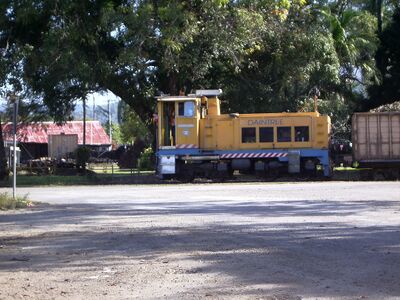 Daintree. (E.M. Baldwin. DH28B. 7303-1-7-77 of 1977).
-
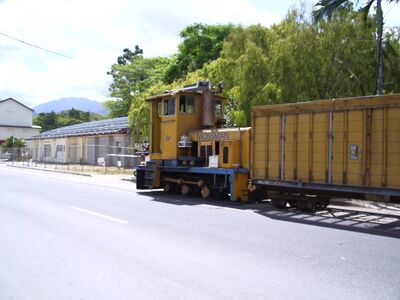 Mossman. (ComEng. AA. B1719 of 1957).
-
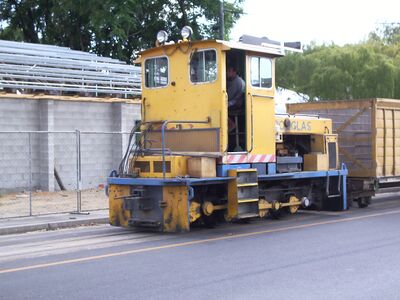 Douglas. (ComEng. AL. 2562 of 1963).
-
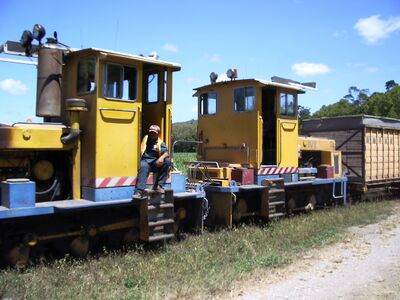 Cook & Ivy. (ComEng. AL. 3372 & 4181 of 1964 & 1965).


The following images are courtesy of William Thomson.
-
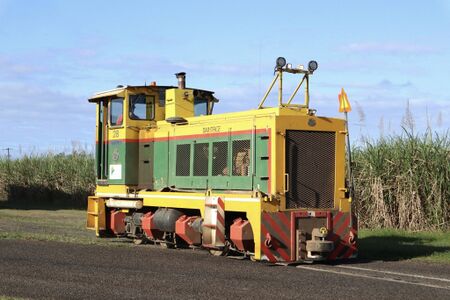 Daintree. (E.M. Baldwin. DH28B. 7303-1-7-77 of 1977).
-
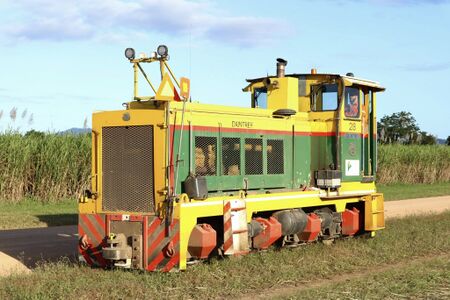 Daintree. (E.M. Baldwin. DH28B. 7303-1-7-77 of 1977).
-
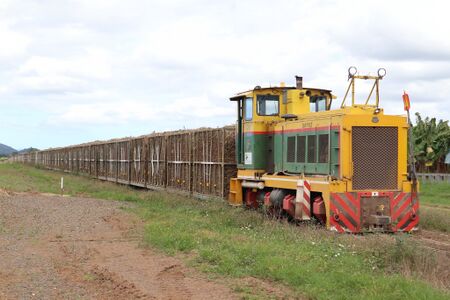 Daintree. (E.M. Baldwin. DH28B. 7303-1-7-77 of 1977).
-
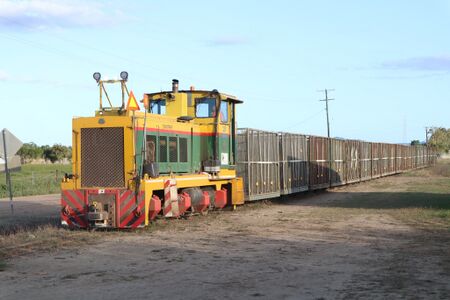 Daintree. (E.M. Baldwin. DH28B. 7303-1-7-77 of 1977).
-
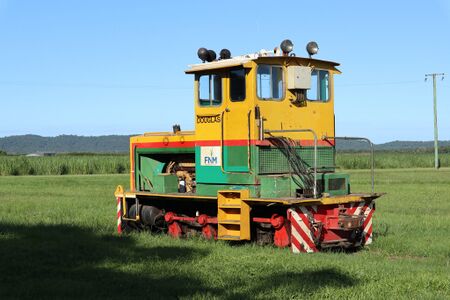 Douglas. (ComEng. AL. 2562 of 1963).
-
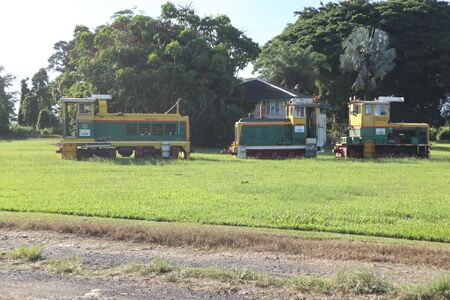 Daintree, Douglas & Habana at South Johnstone's Mourilyan depot.
-
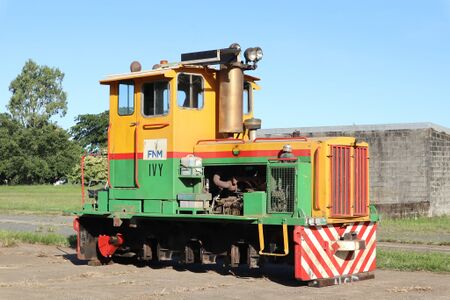 Ivy. (ComEng. AL. 4181 of 1965).


References
- ↑ CANEGROWERS Queensland. Annual Report 2022–2023, Mossman district report.
- ↑ 2.0 2.1 Douglas Shire Historical Society. Mossman & District.
- ↑ 3.0 3.1 Douglas Shire Historical Society. Early Days of Sugar Industry.
- ↑ Douglas Shire Historical Society. Port Douglas.
- ↑ Light Railway Research Society of Australia. Australian Sugar Tramways – Mossman Mill locomotive roster.
- ↑ Dalton's Sources for North Queensland History. Mossman Central Mill Company Limited.
- ↑ Newsport. Mill deal sealed. 6 June 2012.
- ↑ Far Northern Milling. Daintree Bio Precinct.
- ↑ CANEGROWERS. Growers need clarity on Mossman future. 20 November 2023.
- ↑ 10.0 10.1 10.2 10.3 Worrells. Daintree Bio Precinct Group & Mossman Mill enters liquidation. 22 March 2024.
- ↑ CANEGROWERS Queensland. Annual Report 2023–2024, Mossman district report.
- ↑ CANEGROWERS Queensland. Annual Report 2024–2025, Mossman district report.
- ↑ Queensland Government. Commitment to Mossman community unwavering. 17 October 2025.
- ↑ Grays. EOI – Mossman Mill Locomotives & Spares. October 2024.
- ↑ Newsport. Mossman Mill locos on the move. 10 December 2024.
- ↑ Newsport. Our Mossman loco now working in Woodford Railway. 5 January 2026.
- ↑ Australian Locomotive Rosters. Mossman Mill – January 2026. Updated 13 January 2026.
- ↑ Newsport. Cane cages scrapped in latest mill closure move. 19 February 2025.
- ↑ Newsport. Mossman Mill hits the market. 24 February 2025.