
Mulgrave Mill: Difference between revisions
No edit summary |
No edit summary |
||
| Line 11: | Line 11: | ||
| gauge = 610 mm (2 ft) | | gauge = 610 mm (2 ft) | ||
| crush = 1,100,000 tonnes, seasonal average | | crush = 1,100,000 tonnes, seasonal average | ||
}}The Mulgrave Central Mill in Gordonvale, Australia, established in 1896 under the Sugar Works Guarantee Act, became a vital local icon. Built by the Scottish engineering firm A & W Smith with machinery sourced from Glasgow, it marked a significant step in the sugar industry development of the region under grower cooperative management. Its history is deeply intertwined with the community, the railway, and enduring challenges such as tropical cyclones and global market shifts. | }} | ||
The Mulgrave Central Mill in Gordonvale, Australia, established in 1896 under the ''Sugar Works Guarantee Act'', became a vital local icon. Built by the Scottish engineering firm A & W Smith with machinery sourced from Glasgow, it marked a significant step in the sugar industry development of the region under grower cooperative management.<ref name="MSF_History">MSF Sugar. "Mulgrave Mill History". http://www.msfsugar.com.au/our-company/mulgrave-mill/history/</ref> Its history is deeply intertwined with the community, the railway, and enduring challenges such as tropical cyclones and global market shifts. | |||
=== Key Milestones === | === Key Milestones === | ||
==== Formation (1893 to 1895) | ==== Formation (1893 to 1895) ==== | ||
Local farmers in the Mulgrave district organised to secure the economic future of the region. Richard Blackwell provided a crucial 15 acre site for the construction, leading to the registration of the Mulgrave Central Mill Company Limited. This organisation was established under the Sugar Works Guarantee Act of 1893 to access the finance required for the mill's construction. | Local farmers in the Mulgrave district organised to secure the economic future of the region. Richard Blackwell provided a crucial 15 acre site for the construction, leading to the registration of the Mulgrave Central Mill Company Limited. This organisation was established under the ''Sugar Works Guarantee Act'' of 1893 to access the finance required for the mill's construction.<ref name="Trove_1895">The Brisbane Courier. "Sugar Works Guarantee Act". 14 November 1895.</ref> | ||
==== Construction and Opening (1896) | ==== Construction and Opening (1896) ==== | ||
Following its construction by A & W Smith, the mill commenced its first crushing season in late 1896. In its debut year, the facility processed approximately 16,000 tons of cane, which resulted in the production of 1,311 tons of sugar. | Following its construction by A & W Smith, the mill commenced its first crushing season in late 1896. In its debut year, the facility processed approximately 16,000 tons of cane, which resulted in the production of 1,311 tons of sugar. | ||
==== Expansion and Infrastructure (1900 to 1920) | ==== Expansion and Infrastructure (1900 to 1920) ==== | ||
The mill was one of the most successful ventures built under the 1893 Act and quickly became the centre of the local economy. To support the transport of cane, an extensive | The mill was one of the most successful ventures built under the 1893 Act and quickly became the centre of the local economy. To support the transport of cane, an extensive 610 mm (2 ft) gauge tramway system was developed. This network connected surrounding farms to the mill and eventually linked Gordonvale to Cairns via the Cairns to Mulgrave Tramway, which was later incorporated into the government railway system. | ||
==== Community Hub (1939 to 1945) | ==== Community Hub (1939 to 1945) ==== | ||
The mill and its railway remained the heart of Gordonvale throughout the early 20th century. During the Second World War, the mill infrastructure and the surrounding town hosted large numbers of American forces, serving as a significant site for wartime logistics and social life. | The mill and its railway remained the heart of Gordonvale throughout the early 20th century. During the Second World War, the mill infrastructure and the surrounding town hosted large numbers of American forces, serving as a significant site for wartime logistics and social life. | ||
==== Modernisation and Ownership (2012 to Present) | ==== Modernisation and Ownership (2012 to Present) ==== | ||
Despite the impact of severe cyclones and fluctuating sugar prices, the mill has undergone continuous modernisation to remain competitive. In 2012, the long period of grower cooperative ownership concluded when the mill was acquired by MSF Sugar (formerly known as the Maryborough Sugar Factory). MSF Sugar was subsequently taken over by the Thai based company Mitr Phol, which continues to operate the facility as a major regional employer. | Despite the impact of severe cyclones and fluctuating sugar prices, the mill has undergone continuous modernisation to remain competitive. In 2012, the long period of grower cooperative ownership concluded when the mill was acquired by MSF Sugar (formerly known as the Maryborough Sugar Factory). MSF Sugar was subsequently taken over by the Thai based company Mitr Phol, which continues to operate the facility as a major regional employer.<ref name="MitrPhol">Australian Financial Review. "Mitr Phol completes MSF Sugar takeover". 23 February 2012.</ref> | ||
== Location == | == Location == | ||
| Line 81: | Line 82: | ||
File:Mulgrave-11-2.jpg | File:Mulgrave-11-2.jpg | ||
File:Mulgrave-11-3.jpg | File:Mulgrave-11-3.jpg | ||
File:Mulgrave-Mulgrave-3.jpg | File:Mulgrave-Mulgrave-3.jpg | ||
File:Mulgrave-Mulgrave-4.jpg | File:Mulgrave-Mulgrave-4.jpg | ||
| Line 175: | Line 173: | ||
|1,870,000 | |1,870,000 | ||
|13.60 | |13.60 | ||
| | |Historical Record High for the Mulgrave Mill. | ||
|- | |- | ||
|2004 | |2004 | ||
| Line 250: | Line 248: | ||
|976,499 | |976,499 | ||
|14.49 | |14.49 | ||
|High CCS year despite lower physical tonnage. | |High CCS year despite lower physical tonnage.<ref name="Canegrowers_Annual">Canegrowers. "Annual Report 2018/2019".</ref> | ||
|- | |- | ||
|2019 | |2019 | ||
| Line 287: | Line 285: | ||
|Preliminary final; strong recovery after 2024 wet weather. | |Preliminary final; strong recovery after 2024 wet weather. | ||
|} | |} | ||
Revision as of 13:55, 9 January 2026
| Mulgrave Mill | |
|---|---|
|
| |
| Location | |
| Coordinates | 17.09183° S, 145.78959° E |
| State | Queensland |
| Region | Northern Region |
| LGA | Cairns Regional Council |
| Details | |
| Established | 1893 (133 years ago) |
| Owner | MSF Sugar |
| Gauge | 610 mm (2 ft) |
| Annual Crush | 1,100,000 tonnes, seasonal average |

The Mulgrave Central Mill in Gordonvale, Australia, established in 1896 under the Sugar Works Guarantee Act, became a vital local icon. Built by the Scottish engineering firm A & W Smith with machinery sourced from Glasgow, it marked a significant step in the sugar industry development of the region under grower cooperative management.[1] Its history is deeply intertwined with the community, the railway, and enduring challenges such as tropical cyclones and global market shifts.
Key Milestones
Formation (1893 to 1895)
Local farmers in the Mulgrave district organised to secure the economic future of the region. Richard Blackwell provided a crucial 15 acre site for the construction, leading to the registration of the Mulgrave Central Mill Company Limited. This organisation was established under the Sugar Works Guarantee Act of 1893 to access the finance required for the mill's construction.[2]
Construction and Opening (1896)
Following its construction by A & W Smith, the mill commenced its first crushing season in late 1896. In its debut year, the facility processed approximately 16,000 tons of cane, which resulted in the production of 1,311 tons of sugar.
Expansion and Infrastructure (1900 to 1920)
The mill was one of the most successful ventures built under the 1893 Act and quickly became the centre of the local economy. To support the transport of cane, an extensive 610 mm (2 ft) gauge tramway system was developed. This network connected surrounding farms to the mill and eventually linked Gordonvale to Cairns via the Cairns to Mulgrave Tramway, which was later incorporated into the government railway system.
Community Hub (1939 to 1945)
The mill and its railway remained the heart of Gordonvale throughout the early 20th century. During the Second World War, the mill infrastructure and the surrounding town hosted large numbers of American forces, serving as a significant site for wartime logistics and social life.
Modernisation and Ownership (2012 to Present)
Despite the impact of severe cyclones and fluctuating sugar prices, the mill has undergone continuous modernisation to remain competitive. In 2012, the long period of grower cooperative ownership concluded when the mill was acquired by MSF Sugar (formerly known as the Maryborough Sugar Factory). MSF Sugar was subsequently taken over by the Thai based company Mitr Phol, which continues to operate the facility as a major regional employer.[3]
Location
Rollingstock
| Name | Builder | Model | Serial | Year | Current Mill | Notes |
|---|---|---|---|---|---|---|
| 11 / Maitland | E.M. Baldwin | DH18 Mk2 | 4413-2-8-72 | 1972 | Mulgrave Mill | Was Hambledon #1 |
| 13 | Clyde | HG-3R | 64-316 | 1964 | Mulgrave Mill | Was Hambledon #3 |
| 14 | Clyde | DHI-71 | 56-86 | 1956 | Mulgrave Mill | Was Hambledon #4 |
| 15 | Clyde | DHI-71 | 58-190 | 1958 | Mulgrave Mill | Was Hambledon #5. Scrapped - 1998 |
| 16 / Kamma | Clyde | DHI-71 | 56-96 | 1956 | Mulgrave Mill | Was Hambledon #6 |
| 18 / Barron | Clyde | HG-3R | 64-379 | 1964 | Mulgrave Mill | Was Hambledon #8 |
| 19 / Redlynch | Clyde | HG-3R | 65-435 | 1965 | Mulgrave Mill | Was Hambledon #9 |
| 3 | Commonwealth Engineering | AA | A1003 | 1955 | Out of service | Retired 2018 |
| 5 | Commonwealth Engineering | AA | A1005 | 1955 | Mulgrave Mill | |
| 6 | Commonwealth Engineering | AA | A1006 | 1955 | Mulgrave Mill | |
| 7 / Highleigh | Commonwealth Engineering | AA | B1010 | 1955 | Mulgrave Mill | |
| 8 / Charringa | Commonwealth Engineering | AA | A1926 | 1958 | Mulgrave Mill | |
| 9 / Meerawa | Commonwealth Engineering | FC | FC3473 | 1964 | Mulgrave Mill | |
| 10 | E.M. Baldwin | DH6-PS | 6-881-1-6-64 | 1964 | Mulgrave Mill | |
| Gordonvale | Walkers | GH500 | 595 | 1968 | Mulgrave Mill | Converted by Bundaberg Foundry - 1995 |
| Mulgrave | Walkers | GH500 | 613 | 1969 | Mulgrave Mill | Converted by Bundaberg Foundry - 1995 |
| 22 / Aloomba | Eimco | B-BDH | L253 | 1990 | Mulgrave Mill | Rebuilt many times. Last by Mulgrave in 2015 |
| 25 / Cucania | Clyde | DHI-71 | 63-289 | 1963 | Mulgrave Mill | Was Moreton |
| Pie Cart | Mulgrave Central Mill | 4wDM | Out of service | Purchased by Atherton Historical Railway | ||
| 26 / Meringa | Commonwealth Engineering | AK | AK3675 | 1964 | Mulgrave Mill | Was South Johnstone #2 |
| 12 / Riverstone | Commonwealth Engineering | AD | AD1452 | 1961 | Mulgrave Mill | Was South Johnstone #23 |
| 1 | Baguley | BG6 | 3377 | 1953 | Out of service | Being restored by ANGRMS |
| 2 | Commonwealth Engineering | AA | A1001 | 1955 | Out of service | Preserved - Atherton Herberton Historic Railway |
| 4 | Commonwealth Engineering | AA | A1004 | 1955 | Mulgrave Mill | |
| 17 / Deeral | Commonwealth Engineering | AD1453 | AD | 1961 | Mulgrave Mill | |
| Riverstone | Bundaberg Foundry | 1 | 1952 | Out of service | Was Qunaba Jumbo | |
| (Blank) | Motor Rail | 4wDM | 4207 | 1929 | Out of service |
Image Gallery
-
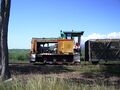
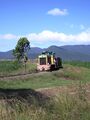
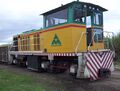
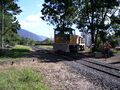
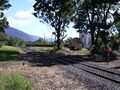
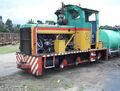 5 (Commonwealth Engineering, A1005, 1955) in the yard connected to poison wagon. 2005.
 -
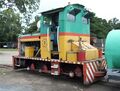 5 (Commonwealth Engineering, A1005, 1955) in the yard connected to poison wagon. 2005.
 -
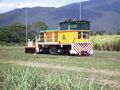
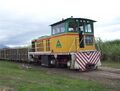
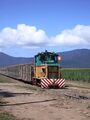 5 (Commonwealth Engineering, A1005, 1955) entering the yard. 2005.
 -
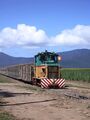
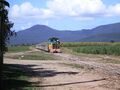
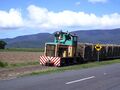
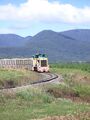
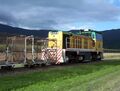
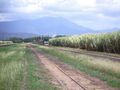 14 (Clyde, 56-86, 1966) on its way back to the mill. 2005.
 -
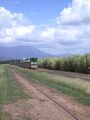 14 (Clyde, 56-86, 1966) on its way back to the mill. 2005.
 -
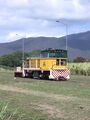
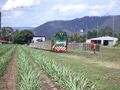 14 (Clyde, 56-86, 1966) leaving the mill with a rake of empties. 2005.
 -
-
-
-
-
-
-
-
-
-
-
-
-
-
-
-


Crushing Statistics
| Year | Tonnes Crushed | CCS % | Notes |
|---|---|---|---|
| 1989 | 1,260,000 | N/A | |
| 1990 | 1,085,000 | 12.8 | Stable production prior to regional consolidation. |
| 1991 | 1,120,000 | 13.10 | Final year of operation for the nearby Hambledon Mill. |
| 1992 | 1,327,944 | 12.50 | First year of processing cane diverted from Hambledon. |
| 1993 | 1,290,000 | 13.05 | Integration of additional Cairns district acreage. |
| 1994 | 1,400,000 | 13.20 | Major bumper crop due to ideal growing conditions. |
| 1995 | 1,385,000 | 12.90 | High throughput maintained following local expansion. |
| 1996 | 1,220,000 | 12.40 | Lower CCS due to late season wet weather. |
| 1997 | 1,100,000 | 14.10 | Dry year; lower tonnage but exceptionally high sugar content. |
| 1998 | 1,250,000 | 12.10 | Impact of heavy rainfall on harvest accessibility. |
| 1999 | 1,180,000 | 11.90 | Cyclonic activity in the region impacted early harvest. |
| 2000 | 950,000 | 12.30 | Significant crop damage caused by cane grub infestations. |
| 2001 | 1,011,249 | 12.80 | Recovery year; yields improved to 74 tonnes per hectare. |
| 2002 | 1,450,000 | 13.40 | Strong recovery in regional crop health. |
| 2003 | 1,870,000 | 13.60 | Historical Record High for the Mulgrave Mill. |
| 2004 | 1,350,000 | 13.20 | Return to average production levels. |
| 2005 | 1,280,000 | 13.10 | Shift towards newer mechanical harvesting techniques. |
| 2006 | 1,080,000 | 11.80 | Severe impact from Cyclone Larry on the Cairns district. |
| 2007 | 1,120,000 | 12.90 | Pre-acquisition stability under cooperative management. |
| 2008 | 1,050,000 | 13.20 | Mill acquired by the Maryborough Sugar Factory (MSF). |
| 2009 | 1,100,000 | 12.70 | First full season under MSF Sugar corporate ownership. |
| 2010 | 850,000 | 12.10 | Unusually wet "Big Wet" season delayed the crush. |
| 2011 | 920,000 | 11.90 | Recovery from Cyclone Yasi; significant standover cane. |
| 2012 | 1,150,000 | 12.40 | MSF Sugar (including Mulgrave) acquired by Mitr Phol. |
| 2013 | 1,210,000 | 13.10 | Infrastructure upgrades improved milling efficiency. |
| 2014 | 1,280,000 | 13.50 | High sugar prices encouraged increased cultivation. |
| 2015 | 1,190,000 | 13.20 | Stable season with favourable spring harvest weather. |
| 2016 | 1,250,000 | 12.80 | Expansion of the Atherton Tableland supply network. |
| 2017 | 1,120,000 | 13.00 | Balanced season with typical regional yields. |
| 2018 | 976,499 | 14.49 | High CCS year despite lower physical tonnage.[4] |
| 2019 | 782,739 | 12.49 | Production trough due to adverse local weather. |
| 2020 | 1,126,832 | 12.70 | Significant rebound in crop size and regional yield. |
| 2021 | 943,355 | 11.60 | Wet conditions slowed the harvest across the district. |
| 2022 | 1,016,543 | 12.31 | Stable season; mill processed over 1 million tonnes. |
| 2023 | 1,004,086 | 11.98 | Ended early due to the onset of Cyclone Jasper flooding. |
| 2024 | 968,391 | 12.41 | Incorporated first intake of cane from the closed Mossman Mill. |
| 2025 | 1,120,000 | 13.15 | Preliminary final; strong recovery after 2024 wet weather. |
- ↑ MSF Sugar. "Mulgrave Mill History". http://www.msfsugar.com.au/our-company/mulgrave-mill/history/
- ↑ The Brisbane Courier. "Sugar Works Guarantee Act". 14 November 1895.
- ↑ Australian Financial Review. "Mitr Phol completes MSF Sugar takeover". 23 February 2012.
- ↑ Canegrowers. "Annual Report 2018/2019".